Phone:
(701)814-6992
Physical address:
6296 Donnelly Plaza
Ratkeville, Bahamas.
Phone:
(701)814-6992
Physical address:
6296 Donnelly Plaza
Ratkeville, Bahamas.
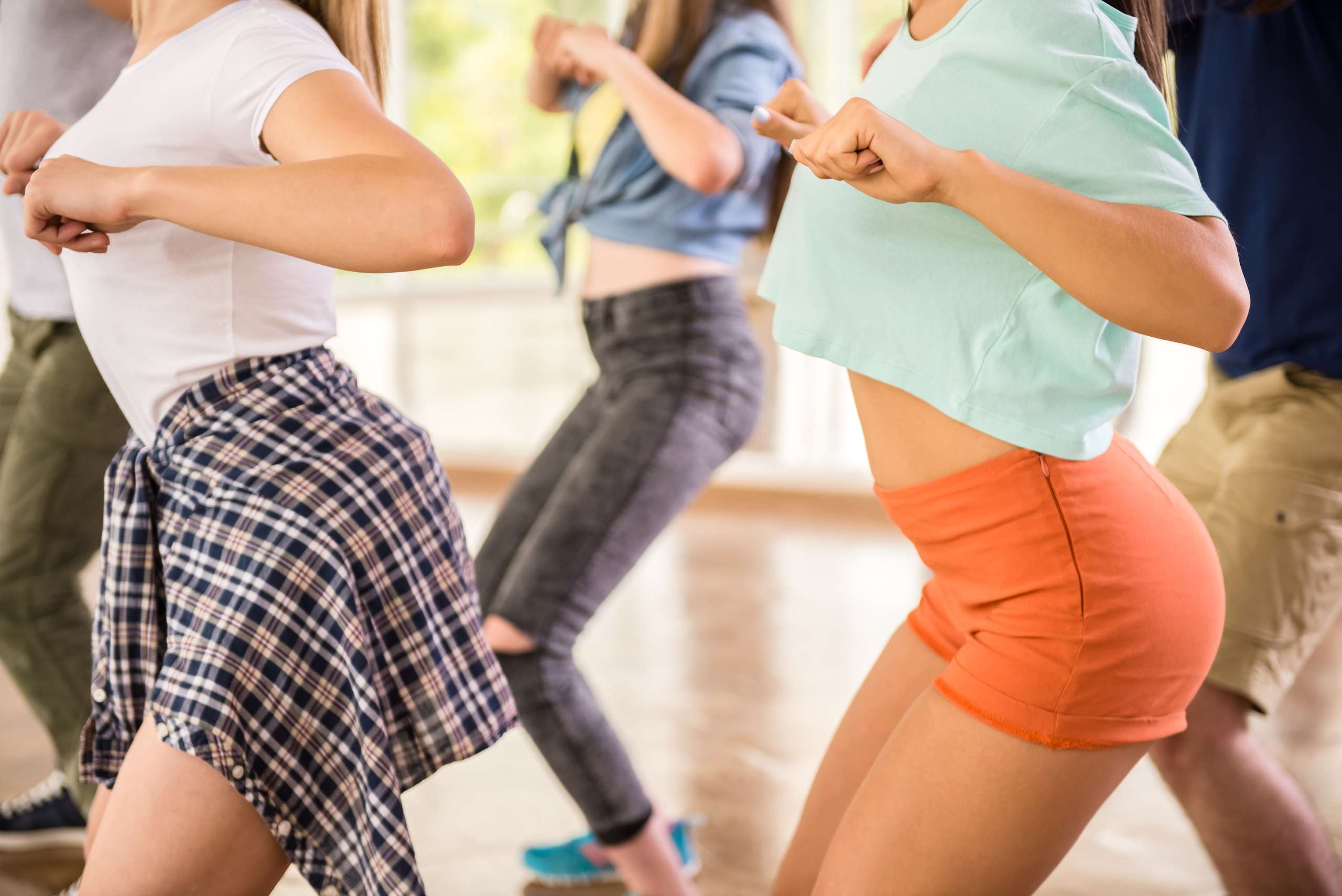
When you can’t seem to remember what comes next halfway through a dance phrase, you start to feel frustrated because you know you learned it just a minute ago. This is usually because your brain is trying to absorb too much information without having reference points. Rather than thinking of choreography as a long string of information, try breaking it down into smaller, smaller phrases that have their own particular timing and flow. It can be very helpful to choose a specific phrase to tell yourself at the beginning of each phrase like “turn” or “step” or “pause.” This can help your brain retain the information because you’re associating the movement with your own command, rather than simply trying to remember.
Practice a few counts at a time until you get it down, and then consciously stop and go back to the beginning. I’ve noticed a lot of new dancers try to push forward to learn the next part of the phrase as soon as they can execute the first part once, but this is too soon. If you drill the first part of the phrase over and over again, it creates a strong anchor for your brain that makes it easier to pick up if you forget it later on. If you can execute the first part of a phrase pretty easily, try adding on the next part and drilling the transition over and over again. This is often the weakest link in people’s memory.
Another trick is to make your movements more dramatic, which can help your body remember where it is supposed to be going. It is also very common for new dancers to practice the choreography too carefully, with movements that feel very similar and are hard to tell apart. Try making a clearer distinction between directions, like forward and backwards, side to side, high and low. When you do this, you create more of an impression on your brain, which makes it easier to recall.
If you still can’t seem to get it, try walking through the phrase without music while repeating the movements to yourself out loud. This slows it way down and focuses on the sequence of steps rather than the timing. If you get it down this way, try it to music again if you can, but slow down the tempo. Sometimes speed masks the places where you’re not sure what to do. If you slow it down, you can isolate where you’re getting hung up and practice just that section.
A short daily practice might involve reviewing the first phrase for several minutes, and then add on the second phrase. Then take a little break and try to recall it from the top as if you just started. End your practice with a run-through or two of the full phrase without stopping. After a while, your body will start to develop a sense of what’s coming up next, and the movements will start to feel less like a string of memorized notes and more like a musical sentence you’re familiar with.